Lagavulin Distillery Jane Taylor Print
Lagavulin Distillery Jane Taylor Print
Jane’s graphics reveal the architectural influence of her Father. Whilst acknowledging the easy attraction in the sensuous shape of the stills and oriental-looking pagodas sitting on top of steep pyramidal roofs, its in the structure of the still houses, malt kilns and warehouses – their whitewashed walls; the variety of windows and chimney stacks – that Jane finds the true balance of functionality and beauty. In stunning locations around the island, the distilleries sit comfortably in their local environment, detracting nothing from the landscape.
Just as each whisky has its individual taste and aromas, so the scale, shape and form of each distillery differs one from an other. Like the spirit they produce, the distilleries have some features in common and some which are unique. All their qualities are represented in this set of prints from Jane’s original acrylic paintings
Image dimension: 15.5cm x 11.5cm and frame is 20.9cm x 16.9cm
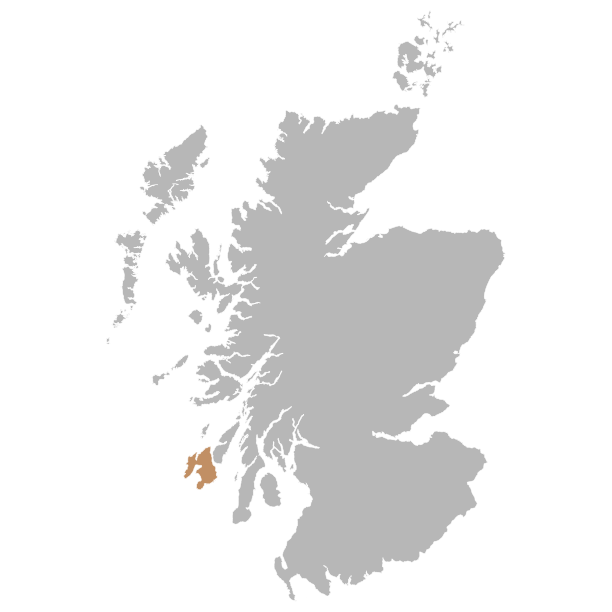
An Islay giant, Lagavulin was established in 1816 by John Johnston and its early years were steady, without some of the drama seen by other distilleries. When the Mackie family took over in 1867, Lagavulin grew in reputation and respect. When the White Horse blend was launched in 1890, Lagavulin formed a major part of its recipe and is forever associated with the iconic whisky. The move to a more corporate ownership began in 1927 with the Distillers Company Limited, leading to Diageo today. In an era of famous Islay names, arguably Lagavulin is only second to Bowmore and its value to Diageo is considerable. The current owners have slowly expanded the core range beyond the staple 16 year old and festival releases. Now, we have a variety of age statements and special editions. It’s no surprise that the distillery is working 7 days a week and producing as much whisky as it can to meet growing demand with the bulk of production shipped to the mainland for maturation, due to the limited warehousing on Islay.